
About Safer Support
Based in Yorkshire, we deliver online and face-to-face training across the country, as well as consultancy and support with policies and procedures. All of our work is tailored to your organisation’s risks, work environment and policies.
We specialise in working with organisations who provide outreach support, including:
- working in other people’s homes
- working in housing schemes, hostels and supported accommodation
- working with people who live a street-based lifestyle
- working in environments where there is open access to the public
Safer Support – who we are

James Allen – started a career in supported housing, as a support worker, over 20 years ago. Worked in various managerial and director positions across several local authorities in the housing and health sectors. James has been delivering personal safety training for the last 10 years.
Lone Worker and Personal Safety Training

Our in-person and online courses equip teams to assess risks, communicate effectively, and respond to threats with confidence, accountability, and in compliance with organisation policies.
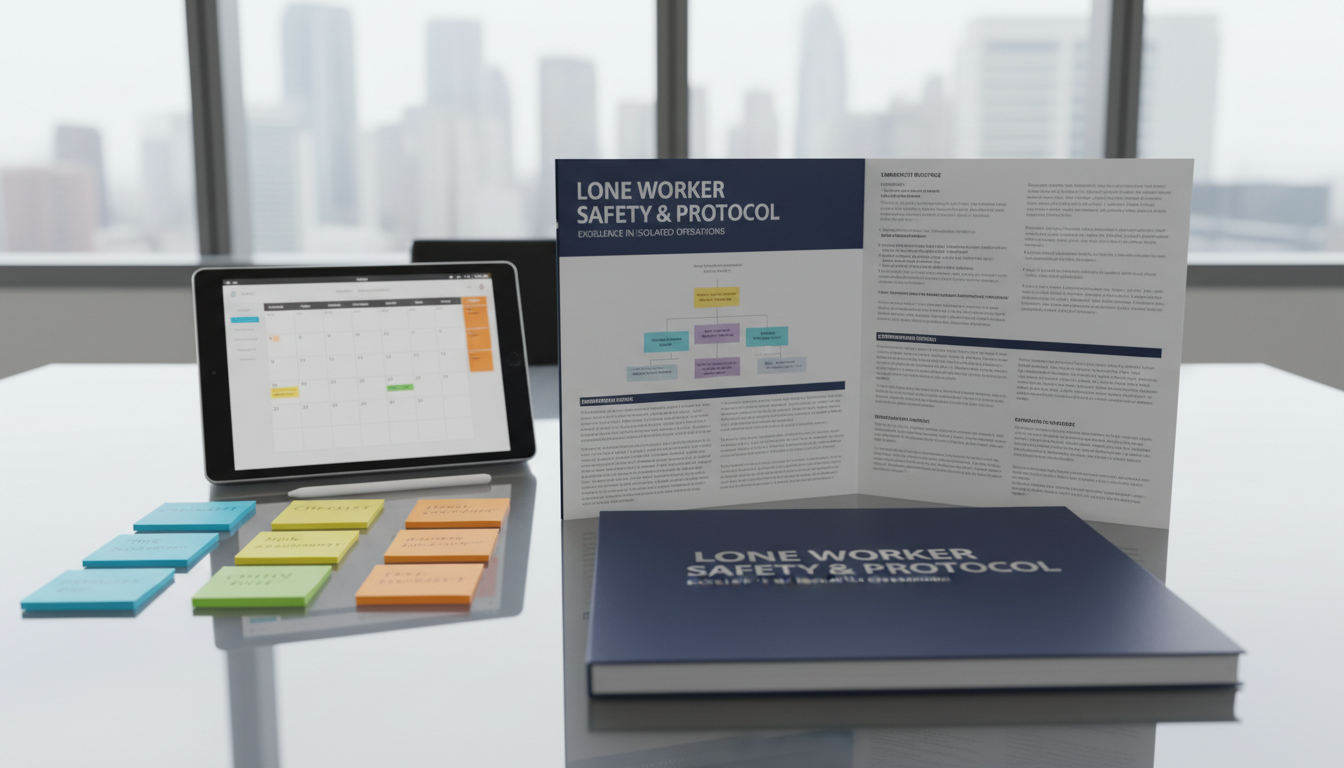
Our bespoke training adapts length, scenarios, and outcomes to your organisation’s unique risks, culture, sector, and size, ensuring practical tools and procedures integrate seamlessly with your existing safeguarding framework.

From risk assessments to policy support, our consultancy helps you implement clear, tested personal safety procedures that protect staff and your organisation.

We draw on strong knowledge of both the statutory and third sectors, alongside practical experience working with high-risk individuals in policing, education, health and support roles.
The benefits and importance of lone working training and policy framework?
Protecting Staff Safety, Wellbeing, and Retention
Lone worker policies, procedures, and training are essential in organisations where staff are required to work alone in environments that may present risk from others, such as community settings, people’s homes, or public-facing roles. Clear arrangements help staff recognise risks, apply appropriate controls, and respond confidently to challenging situations. When employees feel prepared, supported, and safe, it directly improves morale, confidence, and wellbeing, and plays an important role in staff retention, reducing burnout, anxiety, and turnover in roles that can otherwise feel isolating or high risk.
Meeting Legal and Regulatory Responsibilities
Employers have a legal duty under health and safety legislation to assess and manage risks associated with lone working. This includes putting in place suitable policies, safe systems of work, and appropriate training to ensure risks are reduced so far as reasonably practicable. Lone worker training supports compliance by ensuring staff understand organisational expectations, risk assessments, and procedures, while also demonstrating that the organisation has taken proportionate steps to protect its workforce.
Management Accountability, Commissioning Expectations, and Organisational Assurance
Clear lone worker policies and training also provide managers with assurance and accountability. They support consistent decision-making, supervision, and incident response, and help ensure that lone working arrangements are applied fairly and effectively across teams, in line with regulatory requirements, such as Ofsted and the CQC. Increasingly, commissioners expect assurance that organisations have robust arrangements in place to protect staff, manage risk, and meet contractual, safeguarding, and regulatory requirements. By embedding clear procedures and regular training, organisations strengthen governance, reduce organisational risk, and demonstrate responsible leadership to commissioners, regulators, and partners while protecting staff who work alone in potentially high-risk situations.
What about e-learning?
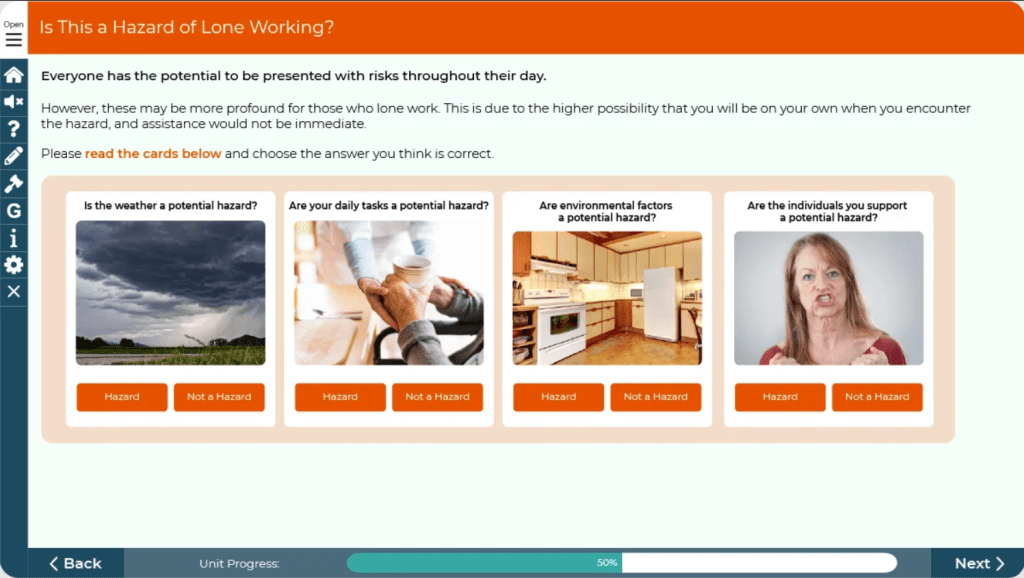
Personal safety e-learning can offer some clear benefits: it is easy to roll out at scale, cost-effective, and allows staff to complete training at a time that suits them. Well-designed modules can introduce key concepts, reinforce policies, and provide a baseline level of awareness, particularly for new starters or refresher learning.
However, in practice, e-learning often struggles to deliver meaningful impact. Colleagues frequently experience it as a tick-box exercise to be clicked through quickly, rather than a learning opportunity. As a result, engagement and retention are typically low, with limited opportunity to reflect on real risks, ask questions, or connect the content to day-to-day work. The training is often generic, and the scenarios presented can feel far removed from the actual environments and situations staff face.
Even where the content is well produced, e-learning can feel more focused on organisational assurance and liability than on genuinely protecting employees. Without discussion, practice, or shared learning, it does little to build confidence, judgement, or practical decision-making. For these reasons, while e-learning can play a supporting role, it is not a substitute for face-to-face, interactive personal safety training that is contextual, reflective, and grounded in real working practice


